

Durable Materials for Engraving: A Selection Guide
Table of Contents
- Why Material Choice Matters for Personalized Engraved Items
- Best Materials for Laser Engraving: Wood, Acrylic, and Metal
- Glass, Stone, and Ceramic: Premium Engraving Blanks
- What Materials Can Be Laser Engraved: Compatibility and Limitations
- Durability Under Real-World Conditions: Which Materials Last
- Achieving Fine Detail and Engraving Clarity Across Materials
- Care, Cleaning, and Maintenance After Engraving
- Selecting the Right Material for Your Personalized Gift
- Frequently Asked Questions
Last Updated: October 18, 2026
Why Material Choice Matters for Personalized Engraved Items
Selecting the right material for personalized durable materials for engraving is the difference between a keepsake that lasts decades and one that fades within months. Material determines how the engraving looks on day one and how it holds up to daily use, temperature changes, moisture, and time.
Most people treat the material as an afterthought, but it's the foundation: it controls whether fine detail stays sharp, contrast remains visible, and the piece feels premium or cheap.
The materials that look beautiful fresh aren't always the ones that look beautiful five years later.
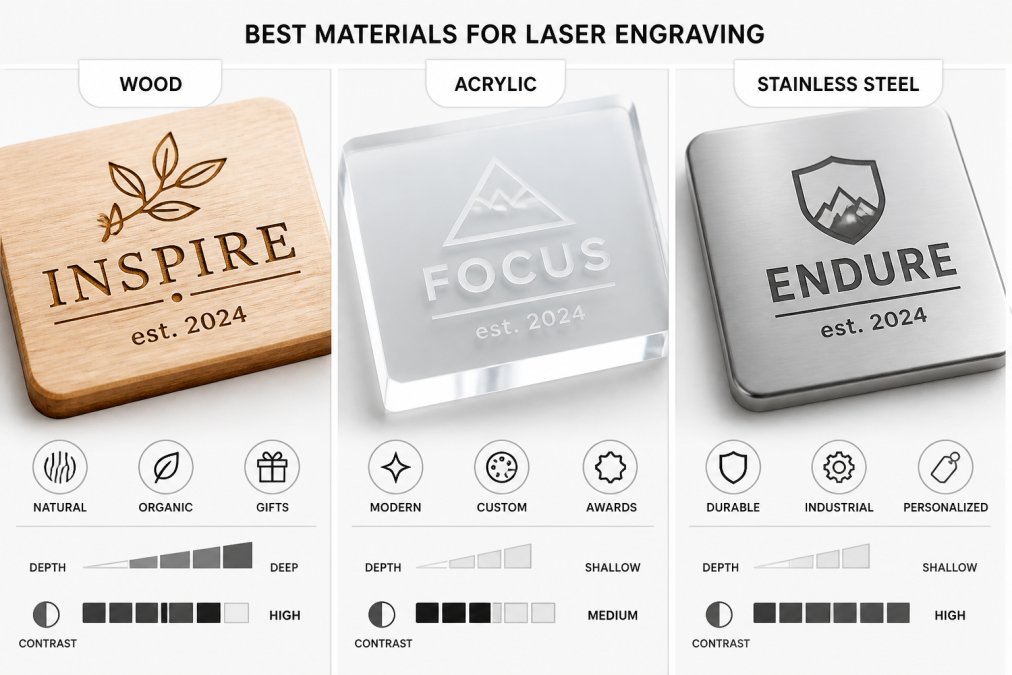
Best Materials for Laser Engraving: Wood, Acrylic, and Metal
When shopping for durable materials for engraving, understanding the differences helps you match material to use case.

Hardwood Options: Maple, Cherry, and Walnut
Hardwoods are a classic choice for engraved personalization: warm, substantial, and engraving with excellent contrast as the laser vaporizes the surface, leaving a dark mark against the natural wood tone.
Wood is organic. It absorbs moisture, expands and contracts with humidity, and can develop surface checking in extreme temperature swings. A wood item in a climate-controlled home lasts indefinitely; in a a humid garage it may show wear within a few years.
Acrylic and Two-Ply Laminate
The downside: acrylic and laminate feel less premium than wood or metal, lighter and cooler to the touch. For a gift where the recipient expects something substantial, acrylic underperforms; for functional items like tool tags or outdoor signs, it excels.
Stainless Steel and Coated Metal
Metal engraving is where durable materials for engraving truly shine. Stainless steel resists corrosion, doesn't dent easily, and holds fine detail sharper than any other material, with the laser creating contrast through oxidation or by removing coatings.
316L stainless steel is the gold standard for durability. It resists salt spray and corrosion better than standard 304 stainless. Items engraved on 316L stainless, like the Custom Engraved Natural Stone Engraved Bar Bracelet available at Mayon Finds, maintain their appearance through years of daily wear.

Metal is a durable choice for items handled constantly, exposed to weather, or used in harsh environments. The trade-off is cost and weight: metal blanks cost more than wood and are heavier to ship.
Glass, Stone, and Ceramic: Premium Engraving Blanks
Glass and stone represent a premium tier of durable materials for engraving. They're chosen for gifts where appearance and perceived value matter most.
Glass Drinkware and Engraving Contrast
Glass engraves beautifully. The laser creates a frosted mark on clear glass, producing sharp contrast. For drinkware like the Custom Engraved 10.5oz Wine Glass and Custom Engraved Bourbon Whiskey Glass offered at Mayon Finds, engraving adds personalization without compromising function.

The engraved area is slightly rough to the touch, a tactile reminder that the piece is custom. The frosting won't fade from dishwasher cycles or years of use, and glass is non-porous, resisting stains and odor.
The vulnerability is impact: glass breaks if dropped. The engraving is permanent, but the vessel is fragile, making engraved glassware best for items the recipient will cherish and protect, like wine glasses for special occasions rather than everyday use.
Stone and Ceramic for Long-Lasting Personalization
Stone engraving is permanent. It accepts laser marks that become part of the material itself. Unlike wood, stone doesn't fade, warp, or deteriorate. A stone nameplate engraved today will look identical in 50 years.
Stone is ideal for items meant to be heirlooms or outdoor installations. It costs more than wood, but the permanence justifies the investment for meaningful personalization.
What Materials Can Be Laser Engraved: Compatibility and Limitations
Not every material is safe for laser engraving: some release toxic fumes, while others melt, char, or degrade unpredictably. Understanding compatibility protects both the engraver's equipment and the finished piece.
Safe materials for laser engraving include wood, glass, and stone. Laser engraving works on these materials by vaporizing or marking the surface without creating hazardous byproducts.
Materials to avoid include PVC and vinyl (they release chlorine gas), fiberglass (it creates fine fibers), and anything with foam or polyurethane core (they ignite easily). Metals require specialized CO2 or fiber lasers and careful settings. Standard laser engravers designed for wood may not handle metal effectively.
Thickness, density, and surface finish all affect how the laser interacts with a material: thin acrylic engraves differently than thick, polished metal differently than brushed. That's why professional engravers test materials before a production run.
Durability Under Real-World Conditions: Which Materials Last
Durability isn't just about the material itself, it's about how the material responds to the environment where it will live.
Wood engraving lasts longest in climate-controlled indoor spaces. Humidity and temperature swings cause wood to expand and contract, eventually cracking engraved lines, and outdoor wood exposed to sun, rain, and freeze-thaw cycles shows visible wear within 3-5 years.
Stainless steel is the most durable material across all environments. It resists corrosion, doesn't fade, and handles temperature extremes without degradation. A stainless steel nameplate engraved today will look identical in 20 years, whether it's mounted on a sunny wall or in a salt-spray coastal environment.
Glass and ceramic are also extremely durable, not degrading from moisture, sunlight, or temperature change. The only risk is breakage from impact; if the piece survives intact, it will outlast every other material.
Custom Engraved 10.5oz Wine Glass — Personalized Engraving, Gift for Wine Lovers →
The practical takeaway: choose the material based on the environment. Hardwood for indoor gifts. Acrylic or metal for outdoor use. Glass or stone for heirlooms meant to last generations.
Achieving Fine Detail and Engraving Clarity Across Materials
Engraved sharpness depends on material density, surface finish, and laser settings, and some materials hold fine detail better than others.
Wood can hold fine detail exceptionally well: uniform grain and consistent density let the laser produce crisp edges, with text as small as 0.1 inches tall remaining readable.
Stone holds fine detail beautifully. It is dense enough to accept precise marks.
Glass is the challenge. Laser engraving on glass works by creating microfractures in the surface. Very fine lines can blur or disappear because the fracture pattern is wider than the intended mark. Engravers typically use larger fonts and bolder designs on glass to ensure clarity.
Metal engraving requires precise laser settings: too much power and the mark spreads, too little and it doesn't show. Skilled engravers dial in settings for each metal type, and the result is always sharp if done correctly.
Care, Cleaning, and Maintenance After Engraving
How you care for engraved items directly affects how long they remain beautiful. Different materials require different approaches.
Wood engraved items should be dusted regularly and wiped with a damp cloth if needed. Never soak wood or leave it wet.
Stainless steel requires minimal care. Wipe with a damp cloth and dry thoroughly to prevent water spots. For items exposed to salt spray, occasional cleaning with fresh water removes corrosive residue. Stainless steel doesn't require special polishing or maintenance.
Glass should be hand-washed or placed on the top rack of the dishwasher. The engraved area is slightly rough and can trap food particles, so gentle scrubbing with a soft brush ensures cleanliness. Avoid bleach or harsh chemicals, which can dull the frosted engraving over time.
Stone requires minimal care. Wipe with a damp cloth and dry. Avoid acidic cleaners, which can etch certain stone types. For outdoor stone, occasional cleaning removes dirt and algae buildup.
Selecting the Right Material for Your Personalized Gift
The best material depends on three factors: the intended use, the environment, and the recipient's expectations.
For gifts meant to be treasured and displayed, choose wood, glass, or stone. These materials feel premium and improve with age, signaling that you've invested thought and resources into the gift.
For gifts meant to be used daily, choose metal. This material tolerates handling, moisture, and temperature change without degradation. A personalized metal bracelet becomes part of someone's routine.
For outdoor installations or harsh environments, choose stainless steel. This material resists weather, UV exposure, and corrosion. A metal nameplate on a coastal property will outlast wood by years.
For heirlooms meant to pass to the next generation, choose stone, glass, or metal. These materials are essentially permanent. They won't warp, fade, or deteriorate. An engraved stone or glass item can be passed down with confidence.
At Mayon Finds, we help you match the material to the purpose. Our Custom Engraved 10.5oz Wine Glass works for someone who entertains and values beautiful drinkware. Our Custom Engraved Bamboo Pizza Peel suits someone who loves outdoor cooking and rustic aesthetics. Our Custom Engraved Natural Stone Engraved Bar Bracelet appeals to someone who wants to carry a personal keepsake every day.
The material is not an afterthought. It's the foundation of a personalized gift that lasts.
Choosing durable materials for engraving means investing in something that will be appreciated for years, not months. Wood, metal, glass, and stone each offer distinct advantages depending on how the recipient will use the item. At Mayon Finds, we curate personalized keepsakes in materials built to last, from our Custom Engraved Wine Glass and Whiskey Glass for entertaining to our Custom Engraved Bamboo Pizza Peel for outdoor gatherings. Start with the material that matches your recipient's lifestyle, and you'll give a gift that improves with age.
Frequently Asked Questions
What is the best material to engrave for a personalized gift that will last?
Stainless steel, wood, and high-quality glass are among the most durable materials for engraving. Stainless steel resists corrosion and scratching, wood can develop a rich patina over time, and glass maintains clarity indefinitely. For gifts meant to be used daily, like drinkware or jewelry, these materials hold up best to everyday wear. Your choice depends on the gift's purpose: wood for rustic warmth, metal for professional durability, and glass for elegant clarity.
Can you engrave stainless steel, wood, and acrylic with a laser machine?
Yes, laser engraving works on all three. Stainless steel produces clean, permanent marks; wood engrave with excellent contrast and uniform grain visibility. Always verify material compatibility with your engraving machine before starting a project.
How do you choose an engraving material for a personalized gift?
Consider three factors: intended use, durability needs, and aesthetic preference. For drinkware and items used daily, choose glass or stainless steel for longevity. For decorative gifts like signs or awards, wood or stone offers visual warmth and fine detail. For jewelry or smaller keepsakes, natural stone with a stainless steel bar provides durability and elegance. Think about whether the recipient will display the item or use it regularly, and select a material that matches that lifestyle.
Which engraving materials hold up best to everyday use?
Stainless steel, high-quality glass, and wood are the most durable for daily use. Stainless steel resists corrosion, scratching, and fading, making it ideal for tools, jewelry, and barware. Glass drinkware like our Custom Engraved Wine Glass and Bourbon Whiskey Glass are dishwasher-safe and maintain clarity and contrast for years. Wood can develop character with age but requires occasional care.