

Why Premium Smart Gadgets Cost More
Table of Contents
- What Makes a Premium Smart Gadget Different
- Why Are Smartwatches So Expensive
- The Real Cost Breakdown: Sensors, Materials, and Build Quality
- Premium vs Budget Smart Gadgets: What You Actually Get
- Are Expensive Smart Gadgets Worth It
- Smart Home Device Compatibility and Long-Term Value
- How to Choose Premium Smart Gadgets That Match Your Budget
- Frequently Asked Questions
Last Updated: October 9, 2026
What Makes a Premium Smart Gadget Different
Premium smart gadgets expensive compared to budget alternatives, standing apart through a combination of engineering precision, material quality, and feature depth that extends well beyond basic functionality. Consumers often conflate "expensive" with "better," but the real distinction lies in what's actually built into these devices. A premium smartwatch doesn't just tell time and count steps, it integrates advanced sensors, proprietary algorithms, and seamless ecosystem connectivity that budget models simply can't match.
The difference becomes tangible when you examine what's under the surface. Premium devices typically feature medical-grade sensors, reinforced construction materials, and software that learns your patterns over time. Budget alternatives often use generic components and simplified interfaces designed to hit a price point rather than optimize performance. This fundamental approach to design creates a gap that grows wider the more you use the device.
Consider how premium smart gadgets expensive options handle data. They process information locally on the device, prioritize privacy through encrypted connections, and maintain consistent accuracy across different usage scenarios. Budget models frequently rely on cloud processing, which introduces latency and raises privacy concerns. These aren't trivial differences, they're core architectural choices that determine whether a device becomes indispensable or merely tolerable.
Why Are Smartwatches So Expensive
Smartwatches command premium prices primarily because they pack sophisticated technology into an incredibly constrained form factor. A typical premium smartwatch contains multiple processors, several distinct sensors, a high-resolution display, and a battery system engineered to last days rather than hours. The miniaturization alone requires specialized manufacturing processes that don't scale down to budget price points.
The sensor array in premium smartwatches represents a significant cost driver. Heart rate monitors, ECG capabilities, blood oxygen sensors, accelerometers, gyroscopes, and GPS receivers all need to coexist in a device smaller than a postage stamp. Each sensor requires calibration, testing, and integration with the main processor. Budget smartwatches typically include only basic accelerometers and simplified heart rate detection, which explains part of the price gap.
Software development for premium smartwatches involves years of refinement. Machine learning algorithms that predict health trends, optimize battery life, and personalize notifications require extensive training data and computational resources. The companies behind premium devices invest heavily in research and development to ensure their software actually delivers on its promises. This ongoing investment gets baked into the product cost.
Battery technology and power management also justify premium pricing. A smartwatch that lasts five days on a single charge requires custom power circuits, optimized processors, and sophisticated software management. Achieving this level of efficiency costs significantly more than the simple power management in budget devices that need daily charging. The engineering to balance performance with battery life is non-trivial.
The Real Cost Breakdown: Sensors, Materials, and Build Quality
Premium smart gadgets allocate their costs across several distinct categories, each contributing meaningfully to the final price. Understanding this breakdown reveals why premium devices cost what they do and where that money actually goes.
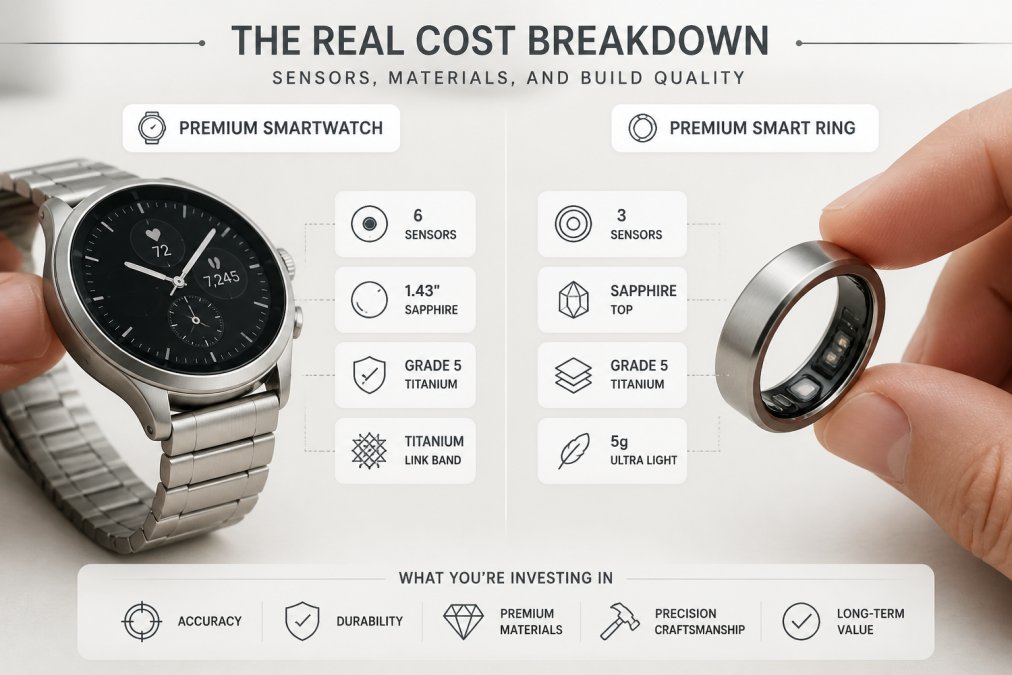
The sensor package represents roughly 25-30% of the manufacturing cost in premium devices. Medical-grade heart rate sensors, ECG electrodes, and blood oxygen measurement systems require precision calibration and rigorous quality control.
Materials and build quality account for another 20-25% of costs. Premium devices use stainless steel, titanium, or sapphire crystal instead of plastic and standard glass. These materials cost more to source, require specialized manufacturing techniques, and demand tighter quality tolerances.
Display technology drives 15-20% of expenses. Premium devices feature AMOLED or high-refresh-rate LCD screens with superior color accuracy and brightness. These displays consume more power to produce but deliver the visual quality users expect from premium products.
Processing power and memory represent 15-20% of costs. Premium devices use faster processors with more RAM, enabling smoother performance and more sophisticated applications. The chips are often custom-designed for the specific device rather than using off-the-shelf components, which increases engineering costs but improves efficiency.
Research, development, and ongoing software updates account for 10-15% of the price. Companies building premium devices invest millions in sensor calibration, algorithm development, and feature refinement. This R&D cost gets distributed across the entire product line, making each individual unit more expensive.
Premium vs Budget Smart Gadgets: What You Actually Get
The practical differences between premium and budget smart gadgets become apparent through real-world use. This isn't about arbitrary price differences, it's about measurable capability gaps that affect daily experience.
Budget smart gadgets typically offer basic functionality: step counting, heart rate monitoring, notifications, and simple app integration. They're designed to work adequately for general users who want fitness tracking without complexity. The trade-offs are real but often acceptable for casual users.
Premium smart gadgets deliver depth across multiple dimensions. Heart rate data comes with context, the system explains why your heart rate is elevated and what that means for your training. Sleep tracking becomes actionable rather than informational. Workout detection identifies activities automatically without manual logging.
The ecosystem integration differs substantially. Premium devices connect seamlessly with your phone, computer, and other smart home devices. Data syncs instantly, notifications arrive reliably, and the experience feels cohesive. Budget devices often experience connectivity lag, missed notifications, and clunky data transfers. This ecosystem advantage compounds over time, the more devices you own, the more valuable the premium experience becomes.
Accuracy represents another critical difference. Premium sensors calibrate against clinical standards and validate their measurements against medical equipment. Budget sensors use simplified algorithms that work adequately for most people but drift in edge cases. For someone tracking health metrics seriously, this accuracy difference matters.
Longevity favors premium devices substantially. Better materials resist wear, software updates extend functionality, and support timelines stretch years longer. A premium device might receive updates for five years while a budget alternative gets two years of support. This extended lifespan reduces your actual cost per year of use.
Are Expensive Smart Gadgets Worth It
Whether premium smart gadgets justify their cost depends entirely on your use case and commitment level. This isn't a universal answer, it's contextual.
Premium smart gadgets make sense if you actively use their features. Someone who logs workouts daily, tracks sleep patterns, and monitors health metrics benefits from sensor accuracy and ecosystem integration. The premium device becomes a tool that genuinely improves your routine.
AI Smart Bluetooth Speaker – 6-Mic Array, Voiceprint Recognition →
Premium devices also make sense if you value reliability and longevity. Paying more upfront for a device that lasts five years rather than two years reduces your annual cost. The better materials mean fewer repairs, the extended software support means continued functionality, and the stronger ecosystem means you're not locked out of future updates.
Budget smart gadgets make sense if you're experimenting with wearables or need basic fitness tracking without complexity. The lower price removes the risk of buying something you won't use. You can try smartwatch technology without significant financial commitment. If you discover you don't actually wear wearables regularly, you haven't spent premium dollars on an unused device.
Budget gadgets also make sense if you already have a competing ecosystem. If you're deeply invested in Android, for example, a premium device designed for iOS might not deliver its full value. In that case, a budget device that works adequately might be the smarter choice than paying premium prices for features you can't access.
The real calculation involves three factors: how actively you'll use the device, how long you expect to keep it, and whether its features align with your actual needs. Premium pricing only makes sense when all three factors align favorably.
Smart Home Device Compatibility and Long-Term Value
Smart home device compatibility extends the value proposition of premium smart gadgets beyond the device itself. A premium smartwatch that integrates with your entire smart home ecosystem becomes more valuable than the sum of its parts.
Compatibility challenges plague many smart home setups. Different manufacturers use different protocols, some rely on WiFi, others use Zigbee or Z-Wave, and newer devices increasingly use Thread. A premium device from a major manufacturer typically supports multiple protocols and works reliably across different ecosystems. Budget devices often support only one or two protocols, limiting their usefulness in mixed environments.
The Graffiti Smart Central Control Home Panel at Mayon Finds exemplifies this compatibility advantage. As a central hub, it bridges different smart home protocols and creates a unified control point for your entire setup. Premium smart gadgets integrate seamlessly with this kind of central hub, while budget devices often struggle with the necessary configuration.

Long-term value increases when devices remain compatible with future additions. Premium devices typically receive firmware updates that add support for new protocols and emerging standards. Budget devices often stop receiving updates after a year or two, leaving you unable to integrate new devices or access new features. This creates a hidden cost, the budget device becomes increasingly isolated as your smart home evolves.
The ecosystem lock-in also matters for long-term value. Premium devices from established manufacturers integrate deeply with their companion apps, cloud services, and other products. This integration creates switching costs, moving to a different brand means losing all that accumulated functionality and data.
How to Choose Premium Smart Gadgets That Match Your Budget
Choosing premium smart gadgets doesn't require spending maximum amounts. Strategic decisions can get you premium quality at more accessible price points.
Start by identifying which features matter most for your use case. Someone focused on fitness tracking needs different capabilities than someone prioritizing health monitoring. Premium devices often include features you won't use, paying for capability you don't need defeats the purpose of buying premium.
The AI Smart Bluetooth Speaker with 6-Mic Array at Mayon Finds demonstrates how premium features can arrive at reasonable price points.

Consider timing your purchases strategically. Premium devices often see price reductions after new models launch. Waiting a few months after a new version arrives can deliver substantial savings on the previous generation without sacrificing functionality.
Bundle purchases strategically within a single ecosystem. Buying multiple premium devices from the same manufacturer often costs less than buying them separately, and the ecosystem integration improves dramatically with multiple devices.
Look for premium devices with extended warranties or trade-in programs. Some manufacturers offer programs that let you upgrade to new models at reduced costs, effectively lowering your long-term ownership expense. These programs reward loyalty and make premium devices more accessible over time.
The Smart Ring Fitness Tracker at Mayon Finds offers another example of premium quality at accessible pricing. At $20, this device delivers wearable technology with NFC support and privacy protection, premium features that typically command higher prices elsewhere.
Premium smart gadgets cost more because they deliver measurable advantages in sensor accuracy, material quality, software sophistication, and ecosystem integration. Understanding what drives those costs helps you make informed decisions about whether premium pricing makes sense for your situation.
Frequently Asked Questions
Why are premium smart gadgets so much more expensive than budget models?
Premium smart gadgets cost more due to advanced sensors, higher-quality materials, rigorous R&D investment, and precision manufacturing. A luxury smartwatch includes heart-rate sensors, GPS, and durable sapphire screens, while budget models use basic sensors and plastic casings. Brand positioning, longer device lifespan, and superior measurement accuracy also justify the price difference. You're paying for reliability, longevity, and features that deliver measurable health and fitness data.
Do expensive smart gadgets actually last longer than budget versions?
Yes, generally. Premium devices use superior materials like stainless steel and sapphire glass, which resist scratches and damage. Budget gadgets with plastic casings degrade faster and often fail within 1-2 years. Premium smartwatches and wearables typically maintain functionality for 3-5 years with proper care. The total cost of ownership, factoring in replacement frequency and repair costs, often favors premium options over time, even at higher upfront prices.
Are expensive smart gadgets worth the money if I'm not a heavy user?
Not always. If you only need basic fitness tracking or occasional smart home control, a budget device delivers similar core functionality. Premium gadgets shine when you need measurement accuracy, seamless ecosystem integration, or daily reliability. Assess your actual use case: casual users benefit less from premium features like advanced health sensors or multi-device compatibility. Mid-range options often offer the best value for moderate users.
What should I look for before buying a premium smart gadget?
Check compatibility with your existing devices, many premium gadgets integrate better across ecosystems. Verify sensor accuracy if health tracking matters to you. Review build materials and water resistance ratings. Consider the manufacturer's track record for software updates and support longevity. Compare total cost of ownership, including potential repairs and replacements. Look for products with clear warranties and proven durability, like the AI Smart Bluetooth Speaker or Smart Ring Fitness Tracker from Mayon Finds, which balance premium features with practical everyday use.